What exactly is the "wet whiteness" of talcum powder? How important is it to the makeup effect of cosmetics?
When many people pick loose powder, powder cakes or honey powder, they are accustomed to first checking if the powder is fine and clean. Of course, that's correct. But if you only focus on "how white the dry powder is" and ignore something called "wet whiteness", it's very easy to fall into a trap: the powder compact you buy appears false white or grayish as soon as it's applied to your face, or becomes dull and yellowish after wearing makeup for a long time.
This "wet whiteness" is not as intuitive as dry whiteness, but it precisely determines whether your makeup effect is natural and sophisticated after application.
Make it clear: dry whiteness and wet whiteness are not the same thing
The "white" of talcum powder can be divided into two types.
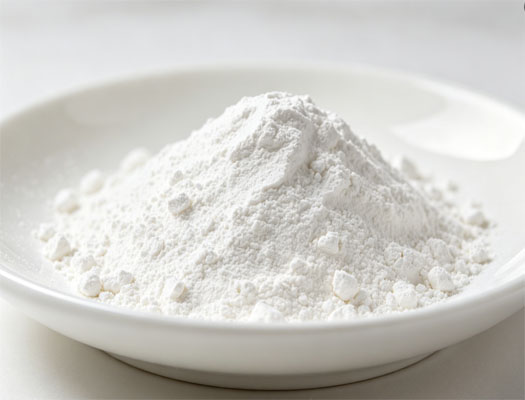
Dry whiteness refers to how white and clean the powder layer is when you open the powder cartridge and see with your naked eye. The finer the powder is ground, the higher the dryness and whiteness tend to be, and the more "snow-white" it looks.
The wet whiteness is different. It is a mixture of talcum powder and oils (such as DMP), simulating the actual whiteness that emerges when it is added to cosmetics and comes into contact with the skin's oils. Simply put - dry whiteness is the "factory appearance level", while wet whiteness is the "true ability to fit the face".
Some talcum powder looks white and fine when dry, but once it is made into powder cakes and applied to the face, it immediately becomes dull, yellowish, and even grayish. The problem lies in the insufficient wet whiteness.
What exactly is wet whiteness measuring? In fact, there are only three numbers
According to national standards, wet whiteness is not perceived by the naked eye. Instead, talcum powder and oil are mixed in proportion and measured with a colorimeter for three values:
L value: Brightness. The higher it is, the whiter and brighter it is
a value: Red and green tones. The closer it is to 0, the more neutral it is
b value: Yellowish blue tone. The lower it is, the less likely it is to turn yellow or dark
For cosmetics, a high L value and a low b value are the true good wet whiteness. Products made with this talcum powder do not show color deviation or dullness, and the makeup is clean.
if the whiteness is not good, three problems will occur on the face
You may have encountered these situations, but you just don't know that the "culprit" behind them is the wet whiteness.
False white and grayish, with a very "cheap" makeup look
When talcum powder with low moisture whiteness is mixed with oil, it will appear dead white or grayish. Especially under the sun, the two colors of the face and neck. The high-moisture whiteness powder on the face is a bright white, even and light, like naturally good skin.
It gets dull after wearing makeup for just a few hours
If impurities such as iron and titanium in talcum powderare not removed completely, the wet whiteness will be low. After applying it to the face, it comes into contact with air and sebum, gradually oxidizing. By the afternoon, the face has turned yellow by one degree. High moisture whiteness powder, with high purity of raw ore and few impurities, keeps the makeup color clean from morning till night.
For the same product, this box is a bit white while the lower one is a bit yellow
This is even more troublesome. If the wet whiteness of talcum powder is unstable, and the L value and b value fluctuate greatly between batches, color differences may occur in the same type of loose powder. The reason why big-name makeup brands are expensive is that part of the money is spent on the stable control of the wet whiteness of raw materials.
How high should the wet whiteness of cosmetic-grade talcum powder be to be considered good?
According to national standards and industry common standards, for talcum powderused in cosmetics, the wet whiteness of top-grade products is usually ≥90, while high-end products are required to reach 93 or even above 95. At the same time, iron salts and heavy metals should be strictly controlled - the fewer impurities there are, the more stable the wet whiteness will be and the cleaner the makeup effect will be.
In a nutshell: Dry whiteness is the face, while wet whiteness is the substance.
Only by choosing the right talcum powder with high moisture whiteness can loose powder and powder compacts achieve the following: fine texture without powder flaking, bright whiteness without mask, and long-lasting makeup without dullness.
Related: