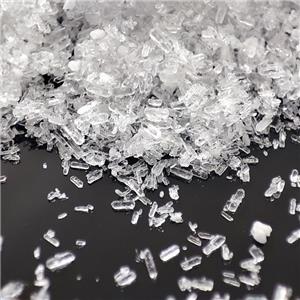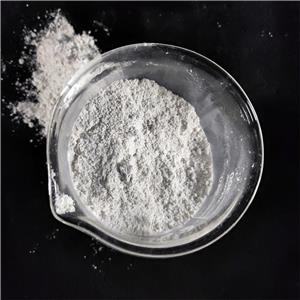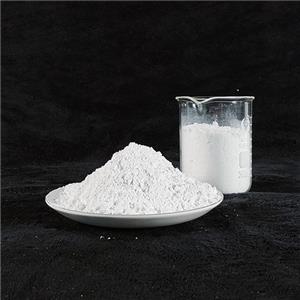
Understanding the basics of talc requires one to understand the following four aspects
Talc, because of its unique set of physicochemical properties, is one of the most popular reinforcing and modifying fillers in industries such as rubber, plastics and paints. Some of the properties that characterize talc are its lubricity, non-sticking properties, ease of flow, fire resistance, resistance to acids, insulation, high melting point, chemical inertness, good coverage, soft gloss, and strong adsorption. Through these excellent properties, the shape stability, tensile strength, shear strength, flexural strength, compressive strength, elongation, coefficient of thermal expansion, brightness, and particle size distribution of products are all significantly impacted by the use of talc.
The layered crystalline structure of talc powder is the main reason for the ease of its cleavage into thin flakes and, as a result, the characteristic smoothness of talc powder. However, at the same time, it is also true that when the amount of iron oxide (Fe₂O₃) is the highest, the insulating properties of the mineral will be drastically diminished.
It's a fact that not every type of talc powder contributes to the reinforcement of the end product to the same extent. And while polymer plastics can be considerably strengthened by the addition of talc powder, the degree to which this is true can vary wildly between different grades of product. With its numerous applications, the industry as a whole finds it almost impossible to create unified and specific standards for talc powder employed in the plastics industry. For this reason, the primary focus of the choice should not be on having the smallest possible particle size but rather on having pure talc powder of the right particle size. Besides, to maximize the effectiveness of talc powder and achieve the best results, support from the manufacturer's technical team is usually necessary. And these are the main points at which at least four aspects of talc powder should be examined: purity, fineness, flake size, and whiteness.
1. Purity: Purity simply means the actual percentage of the talc powder component in a given talc powder sample. 100% pure talc powder does not exist, be it from natural minerals or industrial products. Usually, the higher the purity the more ideal a reinforcing effect will be. Scientific research reveals that some impurities not only lead to a fall in the purity level but can also very drastically and directly reduce the efficiency of the final product.
2. Fineness: The fine-powdering of talc powder is the launch condition for the development of the mineral. On paper, the product with the smallest particles would have the best reinforcing effect. But since extremely fine particles have a very high surface energy, they tend to form agglomerates, thus rendering their dispersion very problematic. And on top of everything else, the costs will be increased as well. So, basically, you should be choosing a particle size that is adapted to your own technological level and actual needs; there is no need to blindly chase "the finer, the better".
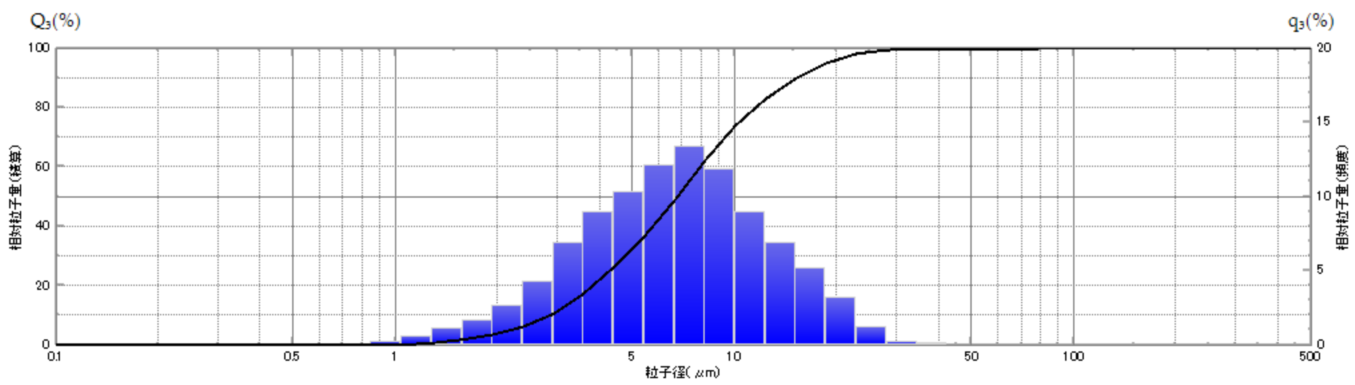
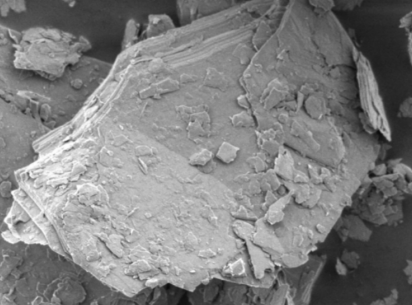
3. Flake Size One of the main reasons why talc powder it's so effective in reinforcing plastic products is why its microscopic lamellar structure is so unique. The more intact the lamellar structure, the more pronounced the reinforcing effect will be. The two critical elements that determine flake size are: the purity of the raw ore and the processing technology and technical level of the powder.
4. Whiteness The whiteness of talc powdercan be categorized narrowly and broadly:
Narrowly defined whiteness: This is the usual concept of whiteness that can be quantified using different methods such as blue light whiteness, Ganz plastic property whiteness, and Hunter whiteness. Moreover, there are at least ten whiteness formulas commonly used in the industry.

Broadly defined whiteness: This broad category includes dry and wet whiteness as well as hue. Generally speaking, for the same raw material, the smaller the particle size, the greater the whiteness; conversely, the larger the moisture level, the lower the whiteness. Even though the whiteness of a product does not influence its material properties, it is important to keep color purity in the case of light-colored products.
In short, the quality assessment of talc products should take four aspects into account thoroughly: purity, fineness, flake size, and whiteness. Quality appraisal based on one indicator only is definitely partial and less reliable. Only by giving consideration to all these four aspects will you be able to purchase a high-grade talc powder that perfectly serves your application requirements.