Key to the electrical performance of inorganic powder: How to choose high-purity talc powder/magnesium hydroxide?-2
B. "Influencing Indicators" as Functional Fillers
Electrical performance is not only an attribute of the material itself but also a key indicator for evaluating the purity of the powder, its surface condition, compatibility with polymers, and the reliability of the final composite material.
1."Probe" for purity:
If the content of impurity ions (such as iron, sodium, and chloride ions, etc.) in the powder is high, these impurities will act as charge carriers, significantly reducing the volume resistivity of the powder.
Therefore, high resistivity is an important indicator of high purity of the powder. For high-end electrical applications, high-purity talc powder or magnesium hydroxide must be used.
2.The "touchstone" of surface treatment:
To improve the combination with polymers, powder is often subjected to surface treatment (such as coating with silane, stearic acid, etc.).
Good surface treatment can:
Reduce the hygroscopicity of the powder surface (water conducts electricity), thereby maintaining high insulation.
Reduce the agglomeration of the powder, make it evenly dispersed, and avoid the formation of conductive paths due to agglomeration.
If the surface treatment is improper or conductive treatment agents are used, it will instead lead to a decrease in resistivity.
Therefore, measuring the electrical properties of composite materials is an important means to evaluate the quality of surface treatment.
3.Core roles in specific functions (taking magnesium hydroxide as an example):
Magnesium hydroxide is a commonly used halogen-free flame retardant. When a polymer burns, it decomposes endothermically and releases water vapor, thereby playing a flame-retardant role.
There exists a key contradiction here: for efficient flame retardancy, the addition amount needs to be very high (usually >50%). The addition of a large amount of fillers, if not well dispersed or with many impurities, can easily destroy the originally continuous insulating structure of the polymer, forming conductive pathways and causing a sharp drop in resistivity.
Therefore, for products like halogen-free flame-retardant cable materials, achieving a balance between "high filler content for flame retardancy" and "maintaining high insulation resistance" is the core of the technology. This requires that magnesium hydroxide must have:
Extremely high purity.
Appropriate particle size and morphology (such as flake-like, which is conducive to forming a more tortuous path in the polymer while reducing damage to the insulating network).
Highly efficient and electrically friendly surface treatment.
At this point, the electrical performance (especially the volume resistivity) directly determines whether this flame-retardant material can be applied in strict electrical environments such as medium and high-voltage wires and cables.
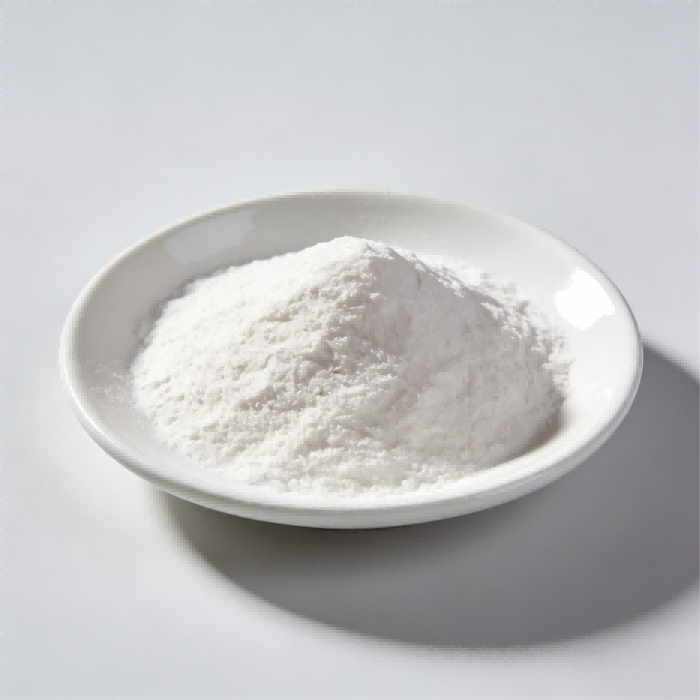
Summary and Comparison: Electrical Performance Considerations of Talc powder vs. Magnesium Hydroxide
| Characteristics | Talc powder | Magnesium Hydroxide (as a flame retardant) |
| Core Electrical Performance | High volume resistivity (excellent insulator) | High volume resistivity (excellent insulator) |
| Main Application Role | Reinforcing filler (improving rigidity, dimensional stability, etc.), while maintaining insulation. | Flame retardant filler (high loading), facing insulation challenges. |
| Electrical Performance Focus | 1. Purity (impact of impurities on insulation). 2. Ability to maintain the insulation of composite materials. | 1. Ultra-high purity is a basic prerequisite. 2. How to maintain high insulation of composite materials at high addition levels (>50%) is a technical key and main challenge. 3. Surface treatment has an extremely sensitive impact on electrical performance. |
| Typical Application Areas | Electrical enclosures, insulating brackets, low-voltage electrical components, etc. | Halogen-free flame-retardant wires and cables (especially medium and low-voltage cable materials), electrical enclosures, and other areas with dual high requirements for flame retardancy and insulation. |
In conclusion, in inorganic powder materials, electrical performance (especially volume resistivity) is far more than just a physical parameter. It is not only a measure of the intrinsic insulation ability of the material but also a crucial comprehensive indicator for evaluating its purity, processing suitability, surface treatment effect, and predicting the reliability of the final composite material in electrical applications. For talc powder and magnesium hydroxide, understanding the essence of their electrical performance is key to their correct application in the electrical and electronic fields.