How to reduce the residue on a 500-mesh sieve? The original manufacturer provides stable powder with a low residual content.
Core Definition
500-mesh residue, also commonly referred to as 500-mesh sieve residue or +500-mesh particle content, refers to the percentage by mass of particles in an inorganic powder material (such as calcium carbonate, talc, kaolin, silica powder, etc.) that cannot pass through a 500-mesh standard sieve.
Simply put, it measures how many "relatively coarse" particles are present in the powder.
500-mesh: refers to the sieve specification. The mesh number indicates the number of sieve openings per inch. The higher the mesh number, the smaller the sieve opening. A 500-mesh sieve corresponds to an opening size of approximately 25 micrometers (µm).
Residue/Sieve residue: refers to the portion that remains on the sieve and does not pass through.
Therefore, 500-mesh residue = the percentage by mass of particles with a particle size greater than approximately 25 micrometers in the total sample.
What does it represent in inorganic powder materials?
500-mesh residue is an important process control and quality performance indicator, mainly representing the following aspects:
1. A direct reflection of powder fineness
The lower the residue value (e.g., ≤0.1%), the finer the powder, with very few coarse particles exceeding 25 micrometers, and the overall particle size distribution is skewed towards finer particles. This is what many high-end applications require.
A higher residue value indicates that there are more "large particles" or "coarse particles" in the powder, and the overall fineness of the powder is insufficient.
2. Reflects the level of production technology
For ground inorganic powders (such as precipitated calcium carbonate, washed kaolin), the 500-mesh residue directly reflects the grinding efficiency and classification effect.
A stable and low residue value indicates that the crushing equipment (such as vertical mills, ring roller mills) and classifiers (such as turbine air classifiers) on the production line are operating well and can effectively remove coarse particles.
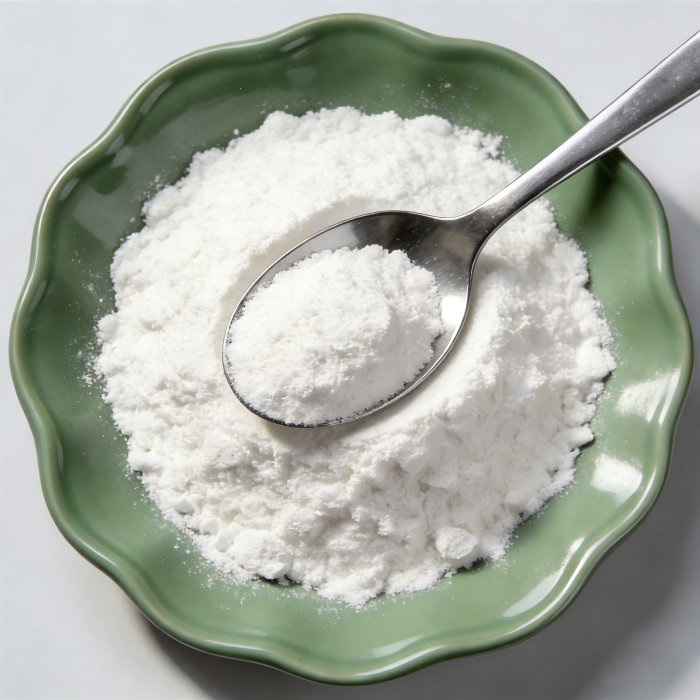
3. A key factor affecting downstream application performance
The presence of coarse particles can have many negative impacts on the quality and process of the final product, and the 500-mesh residue is the "gatekeeper" for controlling these coarse particles:
In coatings and paints: Coarse particles can lead to rough paint film surfaces, reduced gloss, and even scratches. In plastics and rubber: Coarse particles can become stress concentration points, reducing the mechanical properties of the product (such as impact strength and tensile strength), and affecting surface finish.
In papermaking: Coarse particles can wear down expensive papermaking felts and affect the smoothness and print quality of the paper.
In sealants and adhesives: Coarse particles can affect extrudability and flow properties during application, leading to uneven surfaces.
In any application requiring a smooth surface: Coarse particles are a fatal defect and may become apparent after processes such as spraying, calendering, and extrusion.
4. Relationship with other particle size indicators
The 500-mesh residue is a "nodal indicator," which is usually strongly correlated with the D97 particle size (i.e., the particle size corresponding to 97% of the cumulative particle size distribution).
Generally, the lower the 500-mesh residue, the smaller the D97 value. However, the two cannot be completely equated because the shape of the particle size distribution may differ. The 500-mesh residue focuses more directly on the coarse particle portion of the "tail" of the distribution.
How to perform the test?
The test standard usually follows national standards or industry-standard methods:
1.Tools: 500-mesh standard test sieve (aperture approximately 25µm), sieve shaker, balance.
2.Process: Weigh a certain amount (e.g., 10g or 25g) of the dry powder sample, place it on the 500-mesh sieve, and shake it on the sieve shaker for a certain time (e.g., 15 minutes).
3.Calculation: Carefully collect the particles that did not pass through the sieve and weigh them.
Sieve residue (%) = (Mass of residue on the sieve / Total mass of the sample) × 100%
This result is the 500-mesh residue.