Poor powder fluidity and uneven filling? It might be due to a problem with the bulk density.
I. What is Bulk Density?
Bulk density, also commonly referred to as apparent density or packing density, is the mass per unit volume of a powder material in its natural, free-flowing state.
The key point is "natural, free-flowing packing," meaning the powder is poured into a container without any external force (such as vibration, compaction, or tapping), allowing it to fill the container naturally under its own weight.
Calculation formula: Bulk density (ρ_b) = Powder mass (m) / Powder natural packing volume (V_b)
Common units: g/cm³, kg/m³, or g/mL.
Related concepts: In contrast, there is tapped density (density after applying vibration or impact) and true density (the density of the powder material itself without pores). The relationship between the three is usually: true density > tapped density > bulk density.
II. What does it represent in inorganic powder materials?
For inorganic powder materials (such as calcium carbonate, silicon dioxide, titanium dioxide, aluminum oxide, ceramic powders, cement, etc.), bulk density is not just a simple number; it is a comprehensive process performance indicator that reflects multiple physical characteristics of the powder and directly affects its production, storage, transportation, and application. It mainly represents the following aspects:
1. Morphology and structure of powder particles
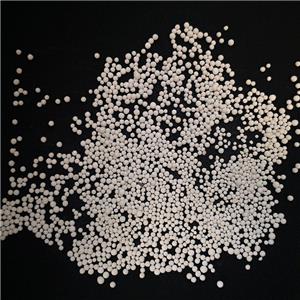
Regular spherical particles: Good fluidity, small inter-particle voids, and usually high bulk density.
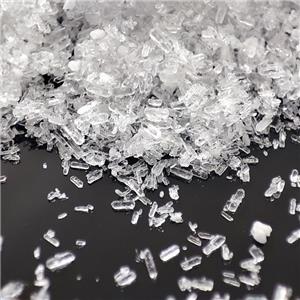
Irregular, flaky, or needle-shaped particles: Easily "bridge" together, forming a large number of voids, resulting in a lower bulk density.
Porous or hollow particles: The particles themselves have internal pores, resulting in a very low bulk density (e.g., fumed silica).
2. Powder fluidity
Generally, the higher the bulk density, the better the fluidity. This is because a high bulk density means less friction between particles, making them easier to flow. This is crucial for automatic feeding, packaging, transportation in pipelines, and filling in molds.
3. Inter-particle forces
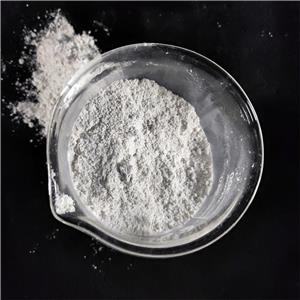
If the particles are very fine (nanometer or micrometer scale), surface electrostatic forces, van der Waals forces, etc., become significant, leading to agglomeration. Agglomerates form a structure similar to a "bunch of grapes," occupying a larger space and leading to a lower bulk density.
4. Particle Size and Particle Size Distribution
Particles of a single size: The void ratio is fixed during stacking (e.g., the theoretical void ratio of uniform spheres is approximately 36%).
Particles with a reasonable particle size distribution: Smaller particles can fill the voids between larger particles, thereby increasing the bulk density. This is an important principle in ceramic pressing and concrete aggregate proportioning.
III. Why is Bulk Density Important in Practical Applications?
1.Packaging and Storage: Bulk density determines the size of the container and storage space required to store a certain mass of powder. Powders with low bulk density are "fluffier" and require larger packaging and warehouses.
2.Conveying and Feeding: In pneumatic conveying or screw feeding systems, bulk density is a key parameter for designing conveying capacity, pipe size, and power requirements.
3.Molding Processes:
Dry pressing (e.g., ceramics, powder metallurgy): Bulk density affects the initial filling amount of powder in the mold, which in turn affects the density uniformity of the green body and the dimensional accuracy of the final product.
Slip casting: Affects the solid content and rheology of the slurry.
4.Reaction and Sintering: For porous materials or catalyst carriers, a lower bulk density may mean higher porosity and specific surface area, which is beneficial for reactions. However, during sintering, excessively low bulk density may lead to excessive shrinkage or insufficient product strength.
5.Composite Material Filling: When adding inorganic powders (such as fillers) to plastics, rubber, and coatings, the bulk density affects the ease of mixing and the actual volume fraction of the powder in the final composite material.
Summary
Bulk density is a fundamental and important physical parameter of inorganic powder materials. It acts like a "fingerprint," indirectly revealing the particle shape, particle size distribution, surface state, and fluidity of the powder. It is not only basic data for powder characterization but also a bridge connecting powder characteristics with actual industrial production and application performance, directly affecting process design, cost control, and the quality of the final product.