Is Magnesium Hydroxide a Strong Base?
Magnesium hydroxide is not a strong base; it is a medium-strength base (or weak base).
The primary reasons are its low solubility in water and the fact that the dissolved portion only partially dissociates to release hydroxide ions (OH⁻). Its alkalinity is much weaker than typical strong bases like sodium hydroxide or potassium hydroxide but slightly stronger than typical weak bases like aqueous ammonia. Therefore, it is often classified as a "medium-strength base" or a "sparingly soluble strong electrolyte."
Magnesium Hydroxide: A Unique Medium-Strength Base—Properties, Applications, and Misconceptions Clarified
Abstract: Magnesium hydroxide, with the chemical formula Mg(OH)₂, is a common inorganic compound. Although its cation is derived from an alkaline earth metal, it is not a strong base. This article will systematically explain the nature of its weak alkalinity based on its dissolution and ionization characteristics, and explore its wide range of applications and common misconceptions.
I. Theoretical Basis: Why Magnesium Hydroxide is Not a Strong Base
In chemistry, the strength of a base is typically determined by its ability to completely dissociate into OH⁻ ions in water.
Very Low Solubility: Magnesium hydroxide is a white solid that is sparingly soluble in water. At room temperature, its solubility is only about 0.00064 g per 100 mL of water. This means the amount of Mg(OH)₂ molecules available in solution is inherently limited.
Incomplete Dissociation: The small amount of Mg(OH)₂ that does dissolve undergoes stepwise dissociation in water: Mg(OH)₂ ⇌ Mg(OH)⁺ + OH⁻ ⇌ Mg²⁺ + 2OH⁻. This is a reversible process with an established ionization equilibrium, unlike strong bases (e.g., NaOH) which dissociate completely. Consequently, the pH of its saturated aqueous solution is typically only around 10 to 10.5, significantly lower than that of strong bases (1M NaOH has a pH of ~14).
In summary, magnesium hydroxide meets the definition of a weak base: it is sparingly soluble in water, and the portion that does dissolve does not fully dissociate.
II. Key Properties of Magnesium Hydroxide
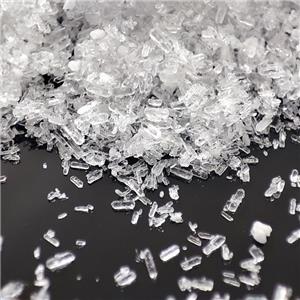
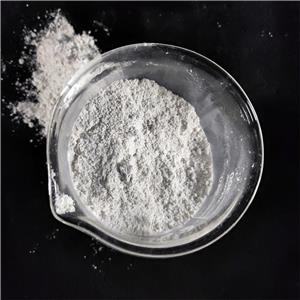
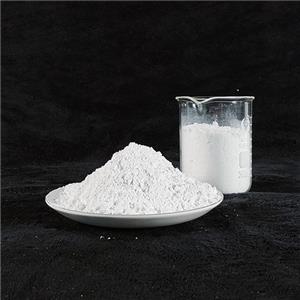
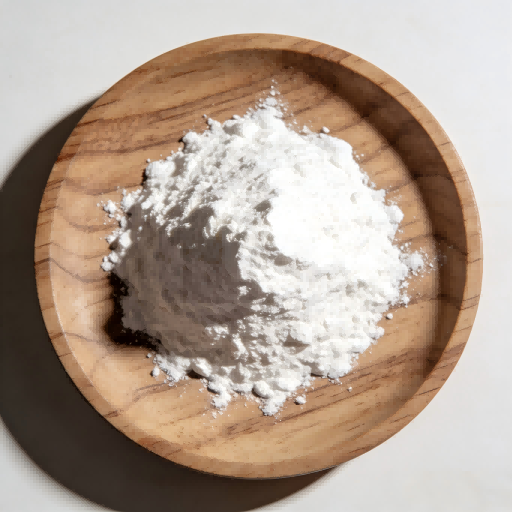
1.Physical Properties: White amorphous powder or colorless crystals, non-toxic and odorless.
2.Chemical Properties:
Alkalinity: Exhibits general base properties and can neutralize acids: Mg(OH)₂ + 2HCl → MgCl₂ + 2H₂O. The reaction is mild and non-corrosive.
Thermal Instability: Decomposes upon heating (around 350°C) to form magnesium oxide and water: Mg(OH)₂ → MgO + H₂O. This property is utilized in flame retardancy.
Adsorptivity: Its suspension (milk of magnesia) has a relatively large specific surface area, enabling it to adsorb certain impurities and colorants.
III. Conclusion
Magnesium hydroxide is a medium-strength/weak base with unique properties. Its "weakness" lies in its limited solubility and degree of dissociation; its "strength" lies in its efficacy and stability as a base. This very characteristic of being "mild yet effective" is precisely why it excels in fields ranging from environmental engineering and flame-retardant technology to medicine and health. A correct understanding of its nature as a weak base is crucial for the more scientific and safe development and utilization of this important inorganic functional material.