Why Must Flame-Retardant Materials Be Modified?
In the application of polymer materials such as plastics, rubber, and epoxy resins, flame retardancy is a core indicator determining product safety and compliance. From the fire resistance rating of building materials to the insulation safety of electronic appliances, and from the flame-retardant standards of automotive parts to the thermal runaway protection of new energy batteries, the performance of flame-retardant materials directly affects whether a product can pass quality inspection and enter the market.
However, many industry practitioners encounter a common pain point: directly adding inorganic flame retardants not only results in unstable flame-retardant effects but also leads to a significant decrease in the material's mechanical properties and processing performance, even causing problems with proper molding. The core reason behind this is the inherent incompatibility between inorganic flame retardants and the polymer matrix. Modification technology is the key path to solving this industry problem.
I. Core Question: Why must flame-retardant materials undergo surface modification?
Commonly used inorganic flame retardants (such as aluminum hydroxide, magnesium hydroxide, aluminum hypophosphite, zinc borate, and phosphorus-based flame retardants) are inherently highly polar, hydrophilic, and prone to particle aggregation; while polymer matrices such as plastics and rubber are mostly oleophilic and non-polar.
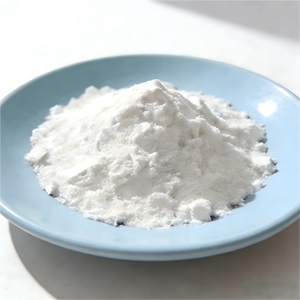
This inherent contradiction between hydrophilicity and oleophilicity directly leads to three fatal problems when the two are blended, which is also the core reason why modification technology is indispensable:
1. Extremely poor dispersibility: Flame retardant particles agglomerate due to surface tension, forming defects such as "white spots" and "hard lumps" in the polymer material. This not only affects the appearance but also leads to uneven stress distribution within the material, creating safety hazards such as cracking and detachment.
2. Weak interfacial bonding: The flame retardant and the polymer matrix are only physically mixed without forming chemical bonds, resulting in a "two-layer" structure. The material is prone to detachment and cracking under external force, leading to a significant decline in mechanical properties.
3. Deterioration of overall performance: After adding unmodified flame retardants, the material's processing fluidity deteriorates (prone to problems such as stringing and mold blockage), the surface becomes rough and dull, and its water resistance and migration resistance are insufficient. During long-term use, the flame retardant is prone to precipitation and inactivation, leading to a decline in the product's flame retardant performance.
In simple terms, the core purpose of flame retardant material modification is to transform hydrophilic inorganic flame retardants into oleophilic/hydrophobic agents through surface modification, reducing their surface energy, improving their dispersibility in the polymer matrix, and enhancing the interfacial bonding between the two—ultimately achieving "flame retardant performance while not sacrificing the material's mechanical, processing, and appearance properties."