Improving the performance of composite materials? Modifying inorganic powders is the key!
I. What is "modification"?
Simply put, modification is the process of intentionally altering the surface or bulk properties of a material through physical, chemical, or mechanical methods to give it functions it did not originally possess or to improve its performance, thereby meeting specific application needs.
You can imagine the material as a "Lego brick":
Before modification: It might have a smooth surface, making it difficult to connect with other bricks, or its color or strength might be unsuitable.
After modification: We can apply a layer of glue to its surface (to increase adhesion), attach Velcro (to change the surface structure), or fuse it with other materials (to form a composite structure), making it easier to connect, stronger, or giving it new functions (such as conductivity or luminescence).
The core purpose of modification is to "leverage strengths and mitigate weaknesses, and enhance value," solving key problems in the practical application of materials, such as dispersibility, compatibility, and functionality.
II. What does "modification" represent in inorganic powder materials?
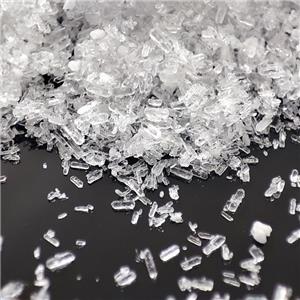
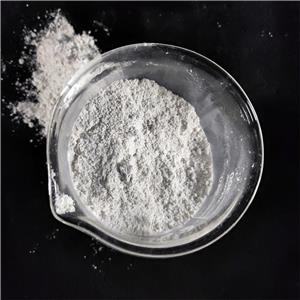
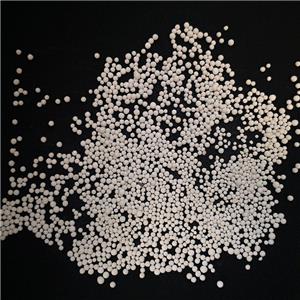
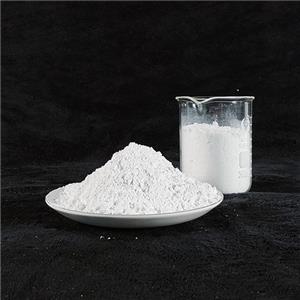
Inorganic powder materials (such as calcium carbonate, talc, silica powder,Magnesium hydroxide, aluminum hydroxide, titanium dioxide, etc.) are widely used in plastics, rubber, coatings, adhesives, papermaking, and other fields, often as fillers or functional fillers.
However, when used directly, they usually have several inherent defects:
Hydrophilic and oleophobic surface: The surface has hydroxyl groups, which are polar, resulting in poor compatibility with organic, non-polar polymers (such as plastics and rubber).
Easy agglomeration: The particles are tiny, with high surface energy, and tend to aggregate together to form "clumps," making uniform dispersion difficult.
Weak interfacial bonding: The bonding with the polymer matrix is weak, easily becoming a weak point under stress, leading to a decrease in the overall strength and toughness of the material.
Therefore, in the field of inorganic powder materials, "modification" mainly refers to "surface modification." Its core meaning is:
Through physical or chemical means, a special modifying agent is coated or grafted onto the surface of the powder particles, thereby changing their surface physicochemical properties (such as polarity, surface energy, wettability, electrical properties, etc.), ultimately achieving three major goals: improving dispersibility, enhancing interfacial compatibility, and imparting or improving specific functions.